Invoicing: Seamless Get Paid Flow
Overview
Invoicing for SMBs is not a document problem, it is a cash-flow problem. The product had to cover the full cycle: create, send, get paid, and close the invoice without manual reconciliation.
Challenge
A small business owner sends an invoice. After that, chaos starts: the counterparty does not understand how to pay, the invoice status is unclear, and the money arrives while the invoice still shows as unpaid.
Most invoicing tools solve only part of the problem: they generate a PDF. But for SMBs, the whole cycle matters: create a correct invoice, give the counterparty a clear way to pay, receive the money, and close the deal without manual reconciliation.
Invoicing should end with money received, not with a PDF sent.
From document generation to end-to-end payment confirmation.
Key complexities
- Public page as an external product. The counterparty is not a Finom user, but the experience must be trustworthy and help people pay.
- Status management. Statuses must be clear to the user while still reflecting reality - partial payments, errors, and manual adjustments.
- Flexibility vs simplicity. Flow accommodates without overwhelming the user with settings.
- Different markets, different rules. Mandatory required fields, formats, local validations.
My approach
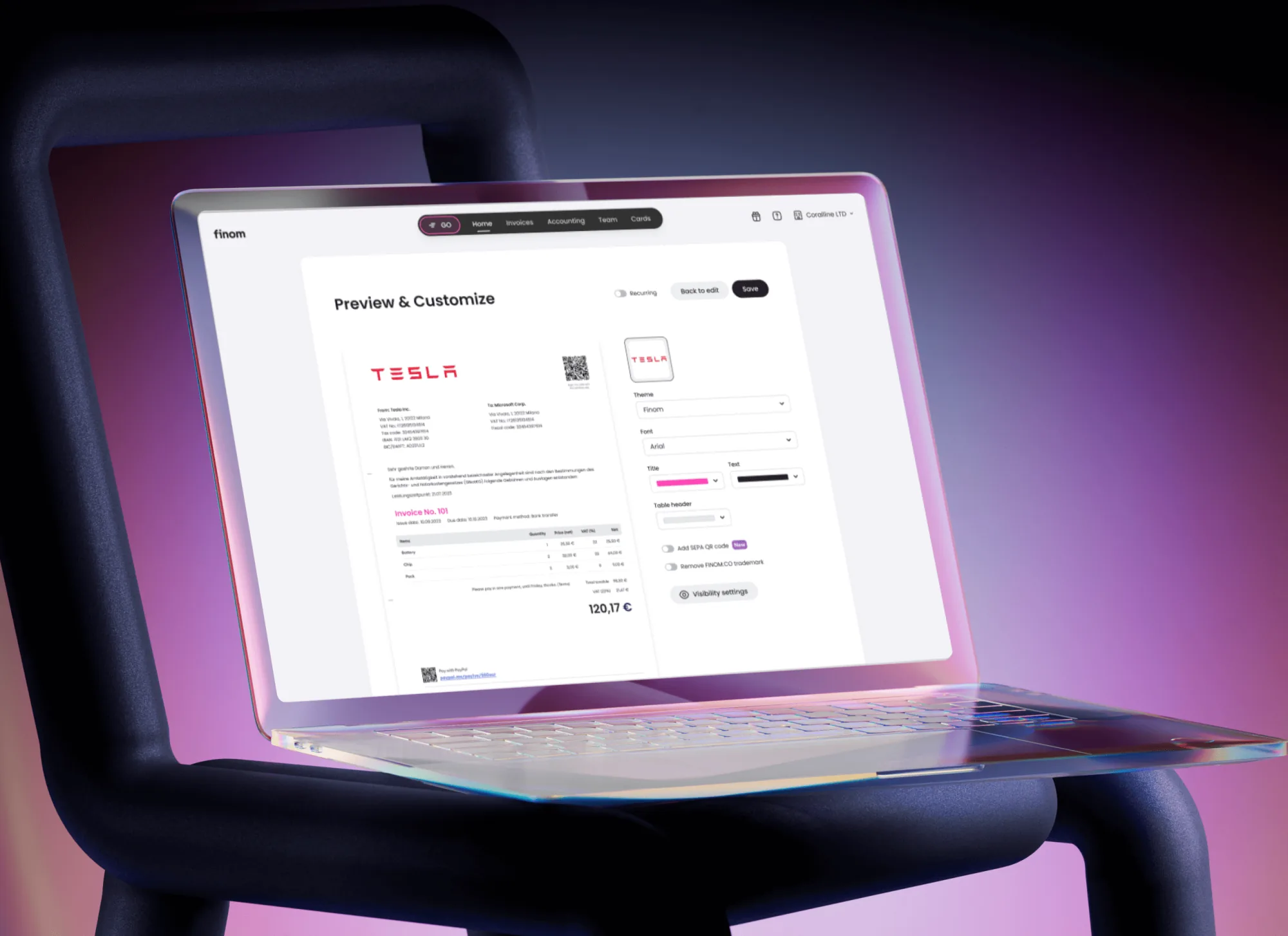
The sender is a Finom user, but the counterparty is not. The public payment page had to be immediately trustworthy and clear for first-time visitors.
We analysed hundreds of reviews and shaped templates for Germany, France, and the Netherlands where invoice expectations differ significantly.
Statuses and transaction events were connected so invoices could move to paid automatically when the money arrived.
What this gave the user
Invoice to public page to counterparty payment in one coherent flow.
Fields and templates can be adapted to jurisdiction-specific business requirements.
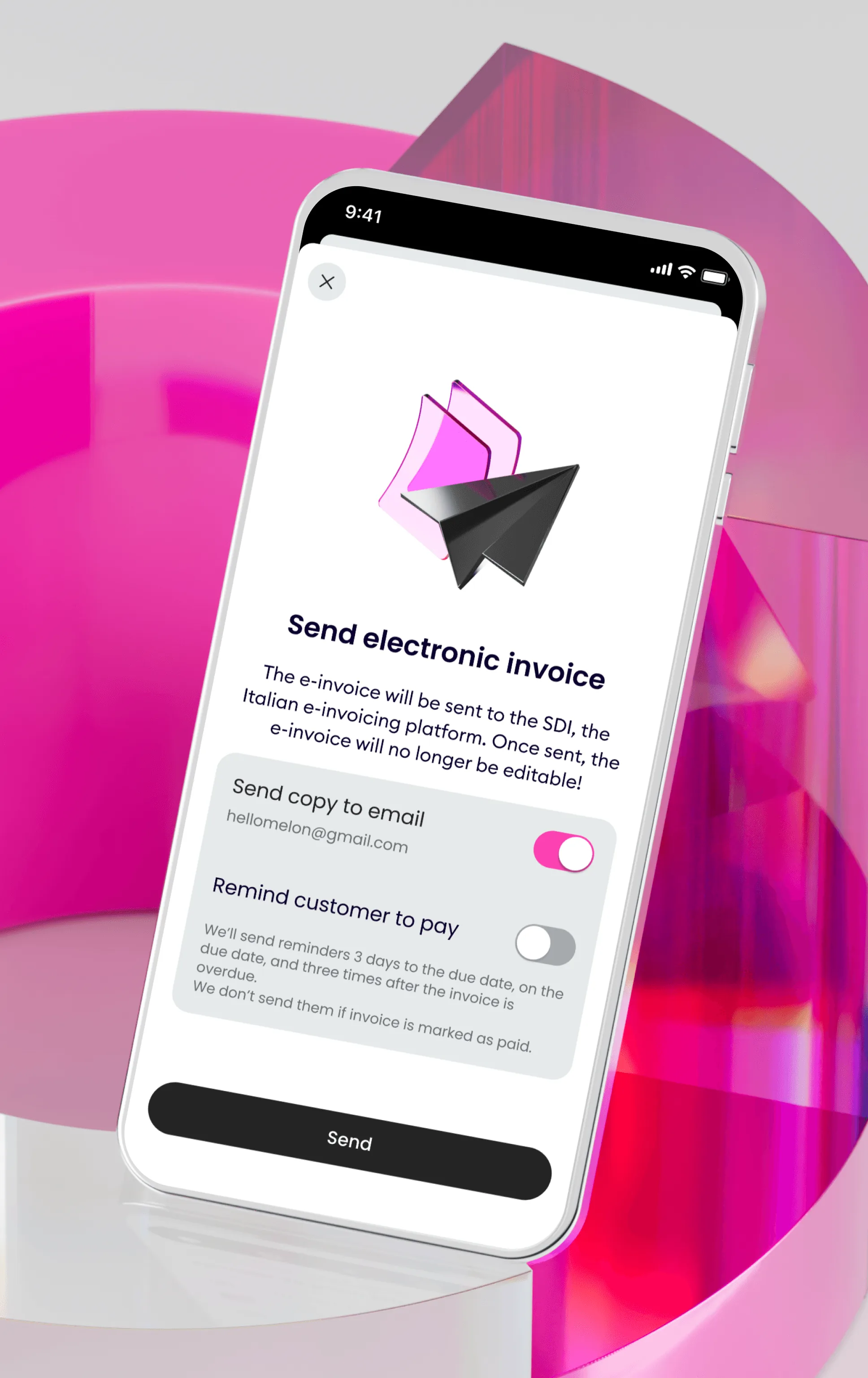
Electronic invoicing with a dedicated status model aligned with local rules.
Transparent status history from draft to sale, including automated closure when funds arrive.
Outcome
The invoicing flow covered the full cycle - from invoice creation to payment reconciliation - and became a measurable part of Finom's revenue infrastructure across all key markets.
-
Invoice-linked payment volume +23%
YoY growth, indicating sustained adoption of the invoicing product over time
-
Invoice completion rate68%
of users who started an invoice completed and sent it without dropping out of the flow
-
Repeat usage54%
of users who sent their first invoice created a second within 30 days, indicating the flow became part of their regular workflow
-
Full e-invoicing support
launched across all key markets, with country-specific validation rules and status models built into the same core flow